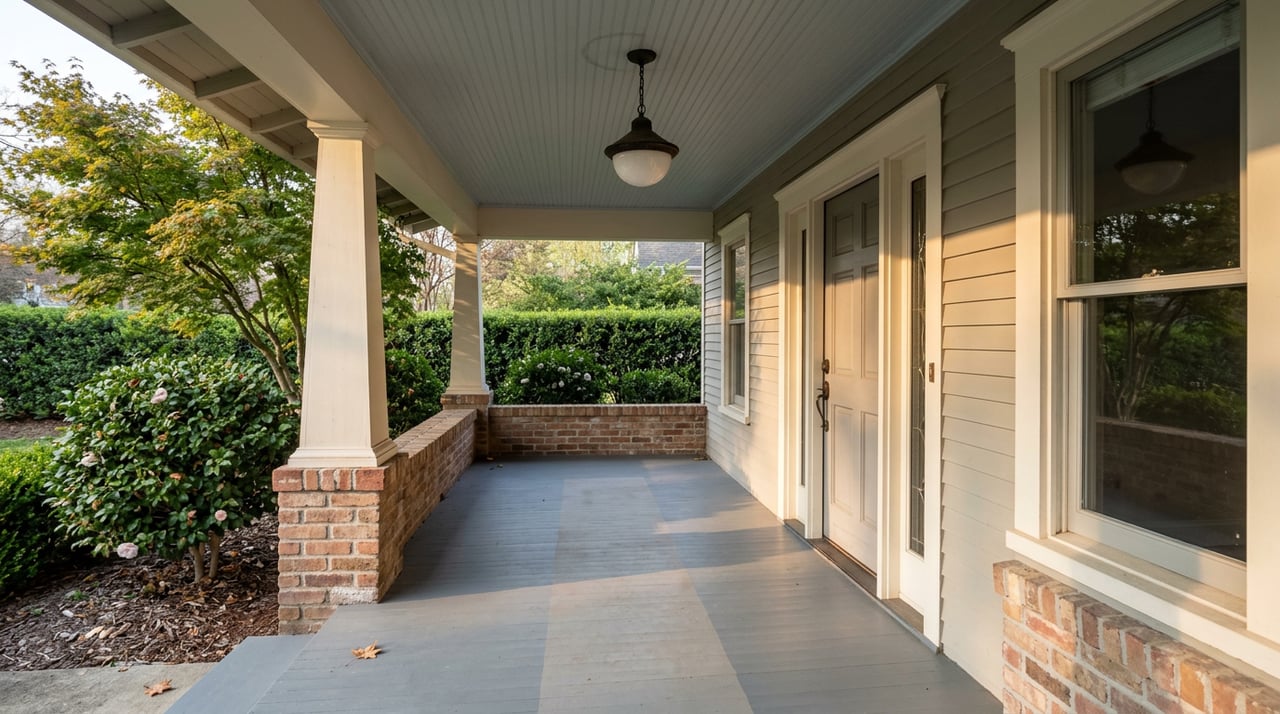
Walk into a showing for a 1920s Craftsman near the Orange Plaza and the listing agent will likely mention the Mills Act before you ask about the roof. It is one of the first things people learn about buying historic in Old Towne: sign a preservation contract with the city, agree to maintain the place, and your property tax bill drops. For decades that pitch has been accurate. Right now it is not the whole story.
The City of Orange is not currently accepting new Mills Act applications. The program is under internal review, and as of the most recent public update from the Old Towne Preservation Association in January 2026, the city has not said when applications will reopen. If you are shopping for a historic home assuming you can apply for this tax break after closing, that assumption needs a second look before you write an offer.
What's actually on hold, and what isn't
The freeze applies to new applications, not to the contracts already in place. More than 200 properties in Orange already carry a Mills Act contract, according to the city's own Property Tax Incentives page, a program the city council created back in 1998. Those contracts still stand. Owners still get the reduced valuation. What has stopped is the ability for a new owner of a qualifying historic property to sign up for one from scratch.
That distinction matters more than it sounds. A Mills Act contract runs with the property, not the person who signed it. When a home under contract sells, the new owner automatically inherits both the tax benefit and the obligations attached to it. So the door into the program hasn't closed entirely. It has just moved. Instead of buying any qualifying historic property and applying, the practical path right now is buying a property that already has a contract recorded against it.
Why the city hit pause
The freeze didn't come out of nowhere, and it isn't unique to Orange. In August 2025, the city sent a compliance letter to Mills Act contract holders that landed badly. OTPA, working with the Orange Legacy Alliance, met with the city's Community Development Department afterward, and city staff acknowledged the letter caused confusion and said it should not have gone out the way it did. That episode, on top of a broader statewide reckoning with how these programs get administered, is part of what pushed the review into motion.
Orange isn't the only California city rethinking this. In March 2026, Redwood City's council voted 6-1 to suspend its own Mills Act applications while it studies the program's structure, according to reporting from the San Mateo Daily Journal. The numbers behind that vote are worth sitting with: the average tax savings for Redwood City's three most recently approved Mills Act properties ran nearly $35,000 a year, while the city calculated it was losing roughly $123,000 annually in property tax revenue to the program, with school districts absorbing an estimated $313,000 more. Redwood City's pause is expected to run until at least December 2027. Santa Monica went a different direction in February 2026, voting 5-2 to postpone its own Mills Act review even after a consultant had already completed a study on reforms, according to Santa Monica Daily Press coverage.
None of this tells you exactly when Orange will reopen its own applications. It does tell you this isn't a paperwork delay that clears up in a council meeting or two. Cities across the state are treating Mills Act administration as a real policy question, weighing lost revenue against preservation value, and that kind of review tends to move slowly.
The move that still works: buying into an existing contract
If new applications are closed, the leverage shifts to homes that already carry a contract. Here's what makes that leverage more durable than it might first appear.
Orange's own program terms, laid out by the Old Towne Preservation Association, set a minimum contract term of 10 years with automatic yearly renewal after that. An owner who wants out early doesn't just cancel and walk away. The program assesses a penalty equal to 12.5 percent of the property's full value for early termination. That penalty is steep enough that sellers rarely unwind a contract before closing, which means a home listed with an active Mills Act contract is very likely to arrive at your closing table with that contract still intact and still transferring to you.
Neighboring Anaheim, which administers its own Mills Act program, spells this out clearly on its historic preservation FAQ: when a Mills Act property sells, the new owner automatically assumes the rights and responsibilities of the contract, and sellers are expected to disclose those obligations along with any unfinished items from the 10-year maintenance plan before the sale closes. Orange operates on the same underlying state law, so the same logic applies here. If a listing mentions an existing Mills Act contract, treat that as a real asset transferring with the home, not a footnote.
The homes worth a closer look right now aren't the ones where an agent tells you "you could apply for Mills Act." They're the ones where a contract is already recorded, already active, and already reducing the tax bill you'd inherit.
The verification step most buyers skip
An active contract isn't automatically a clean one. The same review that froze new applications also produced that August 2025 letter to existing contract holders, and OTPA's January 2026 update noted a second, more targeted letter was coming specifically for property owners flagged as out of compliance, including cases where the required annual Mills Act filing fee hadn't been paid.
That means due diligence on a Mills Act home in Old Towne now has an extra step. Before you assume the tax benefit transfers cleanly:
- Request a copy of the actual Mills Act contract and the property's current tax bill showing the special assessment, not just a listing remark that says "Mills Act."
- Ask the seller directly whether they've received any compliance correspondence from the city's Community Development Department in the past year.
- Confirm the status of the 10-year rehabilitation and maintenance plan, since that document gets updated on a decade cycle and lapses are exactly what the city has been flagging.
- Call the Orange County Assessor's Special Properties Division to verify the parcel's current assessed value under the contract rather than relying on an estimate from the listing.
None of this is difficult, but it's easy to skip when a historic home shows well and the Mills Act line in the listing reads like a settled fact. Right now, in Orange, it's worth one extra phone call.
What this means for your search
If you're weighing a historic Craftsman or Victorian near the Plaza against a newer build elsewhere in the city, the honest framing has changed. A historic home without an existing Mills Act contract is, for the moment, just a historic home. You can't apply your way into the tax benefit after closing, at least not until the city says otherwise. A historic home with an active, verified contract still carries real value beyond its architecture, since that reduced assessment transfers with the deed.
This spring, homes across the city of Orange were moving quickly and closing near full asking price, which tells you competitive homes in Old Towne aren't sitting around waiting for buyers to sort out tax questions later. If a Mills Act contract is part of what makes a listing attractive to you, that's a detail to confirm during your offer, not after.
A few quick answers
Can I apply for a Mills Act contract in Orange right now? No. The city has paused new applications while it reviews the program, and no reopening date has been announced as of the most recent update from January 2026. Check the city's Property Tax Incentives page or upcoming City Council agendas before assuming otherwise.
If I buy a home with an existing Mills Act contract, do I automatically keep the savings? Yes, the contract transfers to you as the new owner, along with the responsibility to maintain the property under the terms the previous owner agreed to. Verify the contract is current and in good standing before you rely on the number.
Does this affect homes outside the historic district? No. The freeze applies specifically to new Mills Act applications for qualifying historic properties within Orange's designated historic districts, including Old Towne. It has no bearing on standard property tax assessments for non-historic homes.
Old Towne's housing stock isn't going to stop being interesting because of a paperwork freeze at City Hall. But the math buyers use to justify a premium for historic charm needs an update while this review plays out. If you're comparing a historic purchase in Orange against something newer, or you own a Mills Act property and want to understand what it's actually worth in today's market, Ryan Salloum can walk through the specific parcel with you and pull the records that actually answer the question. Reach out for a free home valuation and a straight answer on what the numbers mean for your situation.